Oracle 1Z0-883 - Questions & Answers
Free preview · every answer includes a full explanation
Product page: https://prepkeys.com/1z0-883.html
A simple master-to-slave replication is currently being used. The following information is extracted from the SHOW SLAVE STATUS output:
Last_SQL_Error: Error 'Duplicate entry '8' for key 'PRIMARY' ' on query. Default database: 'mydb'. Query: 'insert into mytable VALUES ('8' , 'George') ' Skip_Counter: 0
Retrieved_Gtid_Set: 38f32e23480a7-32a1-c323f78067fd37821: 1-8 Auto_Position: 1
You execute a "SHOW CREATE TABLE mytable" on the slave:
CREATE TABLE `mytable' (
`ID' int(11) NOT NULL DEFAULT `0',
`name' char(10) DEFAULT NULL,
PRIMARY KEY (`ID')
)
The table mytable on the slave contains the following:
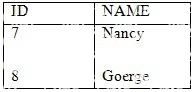
You have issued a STOP SLAVE command. One or more statements are required before you can issue a START SLAVE command to resolve the duplicate key error.
Which statement should be used?
Consider the following statement on a RANGE partitioned table:
ALTER TABLE orders DROP PARTITION p1, p3;
What is the outcome of executing the above statement?
You inherit a legacy database system when the previous DBA, Bob, leaves the company. You are notified that users are getting the following error:
mysql> CALL film_in_stock (40, 2, @count);
ERROR 1449 (HY000): The user specified as a definer (`bon'@'localhost') does not exist
How would you identify all stored procedures that pose the same problem?
When designing an InnoDB table, identify an advantage of using the BIT datatype Instead of one of the integer datatypes.
ROW-based replication has stopped working. You investigate the error log file and find the following entries:
2013-08-27 14:15:47 9056 [ERROR] Slave SQL: Could not execute Delete_rows event on table test.t1;
Can't find record in `t1', Error_code: 1032; handler error HA_ERR_KEY_NOT_FOUND; the event's master
log 56_master-bin. 000003, end_log_pos 851, Error_code: 1032
2013-08-27 14:15:47 9056 [warning] Slave: Can't find record in `t1' Error_code: 1032 2013-08-27 14:15:47
9056 [ERROR] Error running query, slave SQL thread aborted. Fix the problem, and restart the slave SQL
thread with "SLAVE START". We stopped at log `56_master- bin.
000003' position 684 Why did you receive this error?
Mysqldump was used to create a single schema backup; Shell> mysqldump u root p sakila >
sakila2013.sql
Which two commands will restore the sakila database without interfering with other running database?
Consider the Mysql Enterprise Audit plugin.
You are checking user accounts and attempt the following query:
Mysql> SELECT user, host, plugin FROM mysql.users; ERROR 1146 (42S02): Table `mysql.users' doesn't
exist
Which subset of event attributes would indicate this error in the audit.log file?
Which query would you use to find connections that are in the same state for longer than 180 seconds?
A database exists as a read-intensive server that is operating with query_cachek_type = DEMAND.
The database is refreshed periodically, but the resultset size of the queries does not fluctuate.
Note the following details about this environment:
A web application uses a limited set of queries.
The Query Cache hit rate is high.
All resultsets fit into the Query Cache.
All queries are configured to use the Query Cache successfully.

The response times for queries have recently started to increase. The cause for this has correctly been identified as the increase in the number of concurrent users accessing the web service.
Based solely on the information provided, what is the most likely cause for this slowdown at the database level?
You have a login-path named "adamlocal" that was created by using the mysql_config_editor command.
You need to check what is defined for this login_path to ensure that it is correct for you deployment.
You execute this command:
$ mysql_config_editor print login-path=adamlocal
What is the expected output of this command?