VMware 3V0-732 - Questions & Answers
Free preview · every answer includes a full explanation
Product page: https://prepkeys.com/3v0-732.html
A network team has decided to utilize NSX to enable microsegmentation in its environment. Several networks have been created to support a three-tiered application network. An architect has been asked to incorporate this into the vRealize Automation environment and consume these networks on demand.
What are two things the architect needs to take into consideration in this scenario? (Choose two.)
An architect is tasked with designing a backup strategy for vRealize Orchestrator as part of an upcoming production rollout of a Cloud Management Platform.
Which are two valid backup design recommendations? (Choose two.)
A company has a main office, three regional offices, and six branches offices. The network links are configured as shown in the exhibit. View the Exhibit:
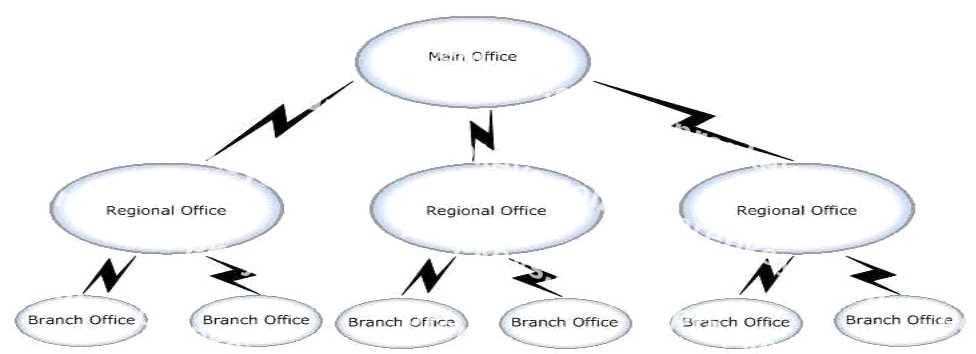
During information gathering, an architect records: The regional offices are located in secure bunkers. The CTO feels this would be a good location for all the vRealize Automation components to meet their BC/DR objectives. However, the CTO is looking for the best design while maintaining their very high security requirements. The branch offices are located in very remote locations with unpredictable network performance. Reliance on the main and regional offices needs to be minimal while still allowing provisioning of machines in the branch offices. The branch offices consist of three host vSphere clusters. There is synchronous vSphere Metro Storage Cluster (vMSC) between the regional offices as well as replicated backups between the regional offices with replication running nightly.
The CEO wants to have the lowest possible RPO and RTO of the vRealize portal including the ability to manage already provisioned machines while NOT increasing the amount of data being replicated between the regional offices as much as possible.
Referring to the exhibit, which two design specifications can the architect recommend to meet requirements? (Choose two.)
The architect for a vRealize Automation project has a customer who wants the ability to do `Backup as a
Service' capabilities through day two operations. This is to allow end users to do on-demand backup and restores of their vRealize Automation workload machines without the need to open a ticket with Support.
To which two infrastructure qualities does this technical requirement map? (Choose two.)
Which two-factor authentication mechanism is supported by vRealize Automation?
The tenant administrator for a company's vRealize Automation deployment is asked to create a profile for a user that should be able to assemble the blueprints that define catalog items for consumers to request from the service catalog.
Which tenant role should this user be granted?
During requirements gathering for an organization's private cloud on a single machine catalog, the following requirements were identified: A user should be able to select a data center location which is mapped to a custom resource by the fabric administrator.
A Guest VM custom hostname format should be based on the first two letters of the data center location.
A generated VM custom hostname format should be displayed as a drop-down in the catalog request pageusing a vRealize Automation (vRA) custom property backed by external vRealize Orchestrator (vRO) action.
Which design recommendation would best address these requirements?
A cloud architect is trying to determine the operational impacts of adding another business group (DevOps) to the company's existing vRealize Automation (vRA) deployment. Existing users have reported that response times for login into their vRA infrastructure has spiked recently and it is taking longer than usual.
The Active Directory user base, after the addition of DevOps users, could increase to well over 100,000 users and 50 groups.
What is the VMware-recommended design to address this scenario?
A cloud architect is tasked with designing a Guest virtual machine (VM) request form for an organization's new vRealize Automation (vRA) implementation. Its current PowerCLI VM request tool uses a PowerShell script that retrieves user IDs from Active Directory, which is the same identity source for vRealize Automation. The intent of the script is to retrieve and display John Smith when the actual value in Active Directory is JSmith01.
What is the most secure way to utilize the same script for user's display name in the vRA request form?
A company is currently experiencing long infrastructure provisioning times, given that the process to ask, review, approve and deploy their services is manual with many people involved. It is considering vRealize Automation as a resolution, but it wants to better understand how much resources it is going to need.
Which three should the architect consider when determining the appropriate vRealize Automation deployment size for this environment? (Choose three.)