PRMIA 8008 - Questions & Answers
Free preview · every answer includes a full explanation
Product page: https://prepkeys.com/8008.html
When estimating the risk of a portfolio of equities using the portfolio's beta, which of the following is NOT true:
If F be the face value of a firm's debt, V the value of its assets and E the market value of equity, then according to the option pricing approach a default on debt occurs when:
Which of the following best describes the concept of marginal VaR of an asset in a portfolio:
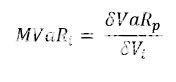
Which of the following statements are true:
I - The set of UoMs used for frequency and severity modeling should be identical II - UoMs can be grouped together into larger combined UoMs using judgment based on the knowledge of the business III - UoMs can be grouped together into combined UoMs using statistical techniques IV - One may use separate sets of UoMs for frequency and severity modeling
Which of the following contributed to the systemic failure during the credit crisis that began in 2007?
Which of the following statements are correct in relation to the financial system just prior to the current financial crisis:
I - The system was robust against small random shocks, but not against large scale disturbances to key hubs in the network II - Financial innovation helped reduce the complexity of the financial network III - Knightian uncertainty refers to risk that can be quantified and measured IV - Feedback effects under stress accentuated liquidity problems
Which of the following is not a risk faced by a bank from holding a portfolio of residential mortgages?
A portfolio's 1-day VaR at the 99% confidence level is $250m.
What is the annual volatility of the portfolio?
(assuming 250 days in the year)
An investor holds a bond portfolio with three bonds with a modified duration of 5, 10 and 12 years respectively. The bonds are currently valued at $100, $120 and $150.
If the daily volatility of interest rates is 2%, what is the 1-day VaR of the portfolio at a 95% confidence level?
Which of the following are measures of liquidity risk
I - Liquidity Coverage Ratio
II - Net Stable Funding Ratio
III - Book Value to Share Price
IV - Earnings Per Share