Exit demo C2090-617 DB2 10 System Administrator for z/OS PDF format · free preview

IBM C2090-617 - Questions & Answers

Free preview · every answer includes a full explanation

Product page: https://prepkeys.com/c2090-617.html

Question 1
Single choice

Assume that you have implemented identity propagation and that the distributed user name is 'MARY'. You have mapped this user name to the RACF user ID 'DB2USER1'.

Which statement is true?

A.

'MARY' is authenticated by RACF.

B.

'DB2USER1' must be defined on the remote system.

C.

Remote requests execute with the authority of 'MARY'.

D.

Audit records for this transaction contains both RACF user ID 'DB2USER1' and the distributed user
'MARY'.

Question 2
Single choice

To satisfy a requirement to track and report on the administrative changes made by users with system DBADM authority, which DB2 catalog table must be modified to enable this requirement?

A.

SYSIBM.SYSDBAUTH

B.

SYSIBM.SYSRESAUTH

C.

SYSIBM.SYSUSERAUTH

D.

SYSIBM.SYSAUDITPOLICIES

Question 3
Single choice

Which limiting attribute CANNOT be included in the definition of a trusted context?

A.

A DB2 SSID.

B.

An IPv4 address.

C.

An IPv6 address.

D.

A secure domain name.

Question 4
Single choice

In order to separate DB2 security administration duties from DB2 system administration duties, which step (s) must be performed?

A.

Set both SECADM system parameters to an authorization ID and Role.

B.

Specify YES to SEPARATE_SECURITY and set one SYSADM system parameter to an authorization
ID or Role.

C.

Specify YES to SEPARATE_SECURITY and set one SECADM system parameter to an authorization
ID or Role.

D.

Specify YES to PROTECT parameter and set one SECADM system parameter to an authorization ID or Role.

Question 5
Single choice

DB2 10 enhances the profile table monitoring facility to support the filtering and threshold monitoring for the number of connections using which categories?

A.

All local and DRDA connections.

B.

Collection IDs and IP addresses.

C.

Role and Authorization Identifiers.

D.

Product Identifiers and Package Names.

Question 6
Single choice

The standard audit trace has limitations.

Which statement is true?

A.

You can audit the catalog tables.

B.

You can audit every access to a table.

C.

You can audit all utilities including DSN1.... ones.

D.

You can start a specific audit trace at DB2 startup.

Question 7
Single choice

What is the process to automatically start an audit policy at DB2 startup?

A.

Specify DSNZPARM subsystem parameters AUDITST = *

B.

Specify DSNZPARM subsystem parameter AUDITST = YES

C.

Specify DSNZPARM subsystem parameter TRACSTR = YES

D.

UPDATE SYSIBM.SYSAUDITPOLICIES SET DB2START=Y for the row of the audit policy to be auto started.

Question 8
Single choice

Which statement describes a DB2 ROLE?

A.

A role is a privilege.

B.

A role is a USERID.

C.

A role is a RACF entity.

D.

A role is a database entity.

Question 9
Single choice

In a production DB2 subsystem, the display of database DBFW8401 shows that pages have been added to the LPL. The indexes for the database have the COPY NO attribute.
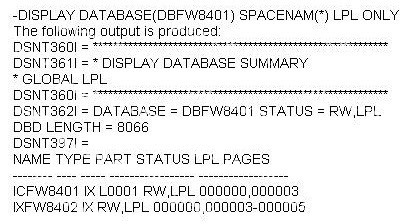
Which utility is used to remove these pages from the LPL status?

A.

REPAIR

B.

RECOVER

C.

CHECK INDEX

D.

REBUILD INDEX

Question 10
Single choice

What does the command -ALTER GROUPBUFFERPOOL(GBP1) RATIO(5.6) do?

A.

Changes the ratio of directory entries to the local cache entries (LCE).

B.

Changes the desired ratio of the number of lock entries to the number of data pages in the group buffer pool.

C.

Changes the desired ratio of the number of directory entries to the number of data pages in the group buffer pool.

D.

Changes the desired number of the data pages cast out to those that remain in the group buffer pool when the group buffer pool checkpoint occurs.

Showing 10 of 126 questions · Unlock the full set