Exit demo QSDA2024 Qlik Sense Data Architect Certification - 2024 PDF format · free preview

QlikView QSDA2024 - Questions & Answers

Free preview · every answer includes a full explanation

Product page: https://prepkeys.com/qsda2024.html

Question 1
Single choice

Refer to the exhibit.

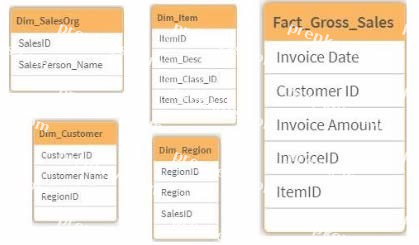
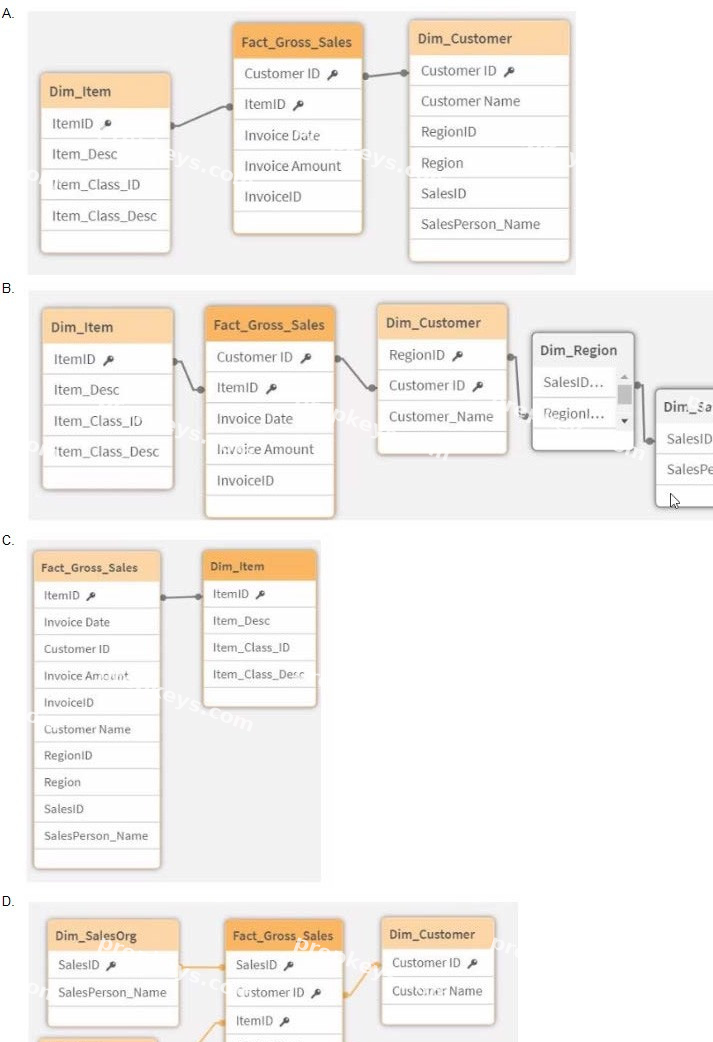
A data architect is provided with five tables. One table has Sales Information. The other four tables provide attributes that the end user will group and filter by.

There is only one Sales Person in each Region and only one Region per Customer.

Which data model is the most optimal for use in this situation?
A.

Option A

B.

Option B

C.

Option C

D.

Option D

Question 2
Single choice

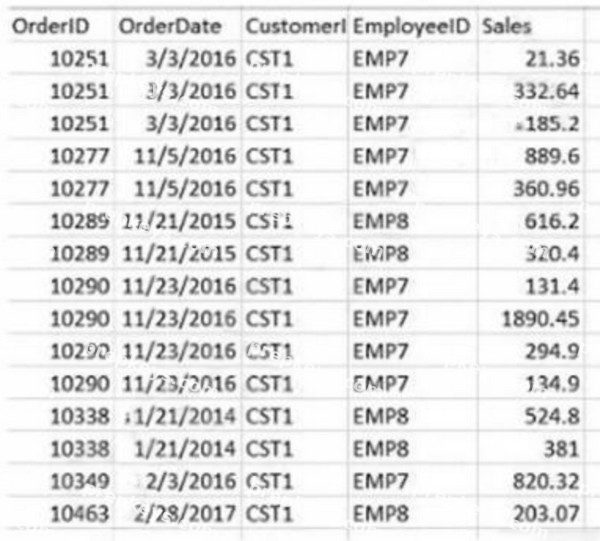
Refer to the exhibit.

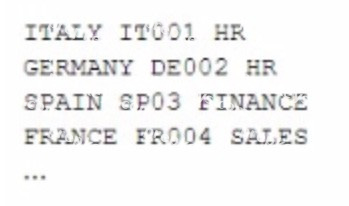
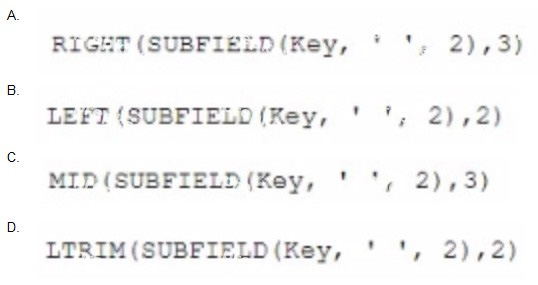
A company stores the employee data within a key composed of Country, UserlD, and Department. These fields are separated by a blank space. The UserlD field is composed of two characters that indicate the country followed by a unique code of two or three digits. A data architect wants to retrieve only that unique code.

Which function should the data architect use?
A.

Option A

B.

Option B

C.

Option C

D.

Option D

Question 3
Single choice

Exhibit.

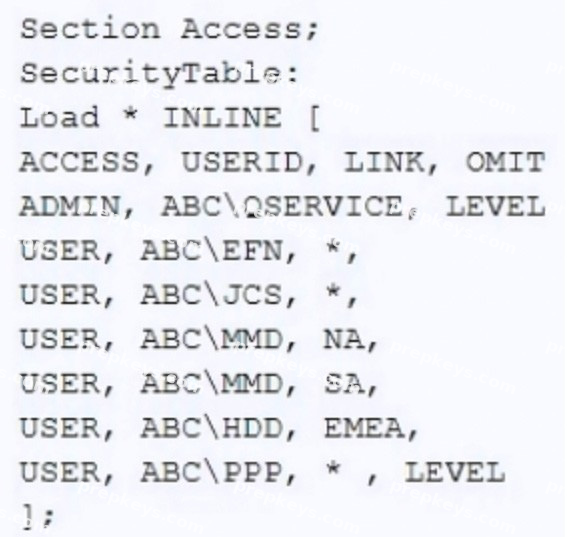
The Section Access security table for an app is shown. User ABC\PPP opens a Qlik Sense app with a table using the field called LEVEL on one of the table columns.

Which is the result?

A.

The table is removed from the user interface.

B.

The user gets an 'Incomplete visualization' error.

C.

The user gets a 'Field not found' error.

D.

The table is displayed without the LEVEL column.

Question 4
Single choice

A company generates l GB of ticketing data daily. The data is stored in multiple tables. Business users need to see trends of tickets processed for the past 2 years. Users very rarely access the transaction-level data for a specific date. Only the past 2 years of data must be loaded, which is 720 GB of data.

Which method should a data architect use to meet these requirements?

A.

Load only 2 years of data in an aggregated app and create a separate transaction app for occasional use

B.

Load only 2 years of data and use best practices in scripting and visualization to calculate and display aggregated data

C.

Load only aggregated data for 2 years and use On-Demand App Generation (ODAG) for transaction

data

D.

Load only aggregated data for 2 years and apply filters on a sheet for transaction data

Question 5
Single choice

A data architect executes the following script:
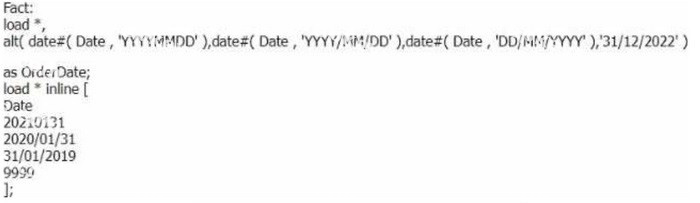
Which values does the OrderDate field contain after executing the script?

A.

20210131, 2020/01/31, 31/01/2019

B.

20210131, 2020/01/31, 31/01/2019, 9999

C.

20210131, 2020/01/31, 31/01/2019, 0

D.

20210131, 2020/01/31, 31/01/2019, 31/12/2022

Question 6
Single choice

Refer to the exhibit.

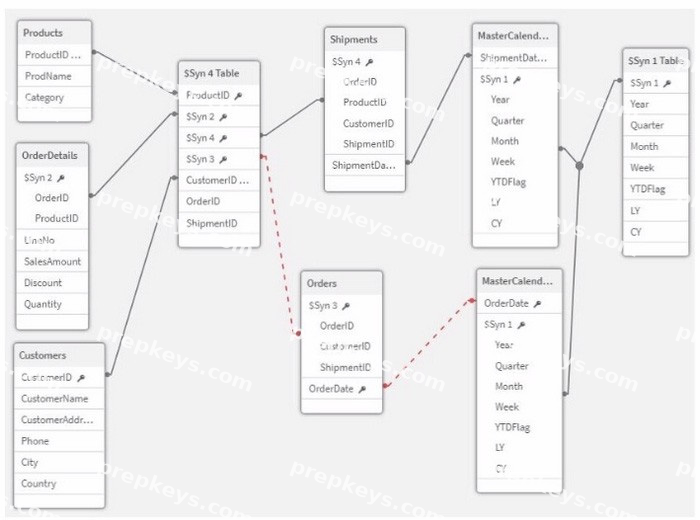
A data architect is working on a Qlik Sense app the business has created to analyze the company orders and shipments.

To understand the table structure, the business has given the following summary:

1. Every order creates a unique orderlD and an order date in the Orders table
2. An order can contain one or more order lines one for each product ID in the order details table
3. Products In the order are shipped (shipment date) as soon as they are ready and can be shipped separately
4. The dates need to be analyzed separately by Year, Month, and Quarter

The data architect realizes the data model has issues that must be fixed.

Which steps should the data architect perform?

A.

1. Create a key with OrderlD and ProductID in the OrderDetails table and in the Shipments table
2. Delete the ShipmentID in the Orders table
3. Delete the ProductID and OrderlD in the Shipments table
4. Left join Orders and OrderDetails
5. Use Derive statement with the MasterCalendar table and apply the derive fields to OrderDate and ShipmentDate

B.

1. Create a key with OrderlD and ProductID In the OrderDetails table and in the Orders table
2. Delete the ShipmentID in the Shipments table
3. Delete the ProductID and OrderlD in the OrderDetails table
4. Concatenate Orders and OrderDetails
5. Create a link table using the MasterCalendar table and create a concatenated field between
OrderDate and ShipmentDate

C.

1. Create a key with OrderlD and ProductID in the OrderDetails table and in the Shipments table

2. Delete the ShipmentID in the Orders table
3. Delete the ProductID and OrderlD In the Shipments table
4. Concatenate Orders and OrderDetails
5. Create a link table using the MasterCalendar table and create a concatenated field between
OrderDate and ShipmentDate

D.

1. Create a key with OrderlD and ProductID in the OrderDetails table and in the Orders table
2. Delete the ShipmentID in the Shipments table
3. Delete the ProductID and OrderlD in the OrderDetails table
4. Left join Orders and OrderDetails
5. Use Derive statement with the MasterCalendar table and apply the derive fields to OrderDate and ShipmentDate

Question 7
Single choice

Refer to the exhibit.

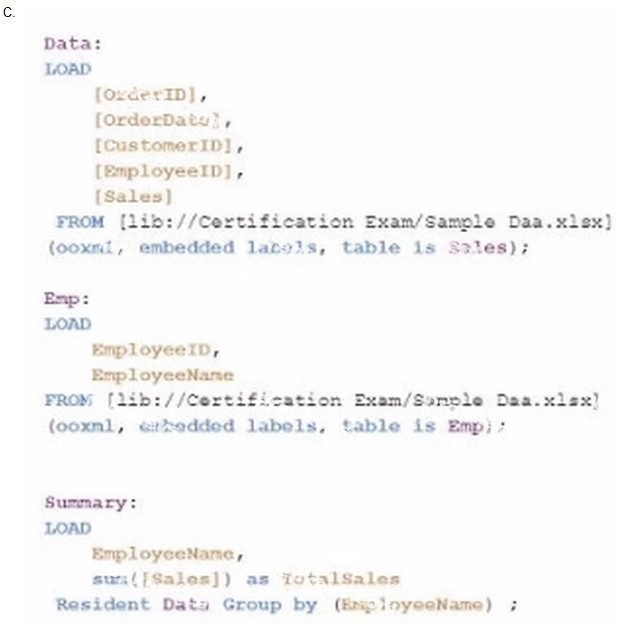
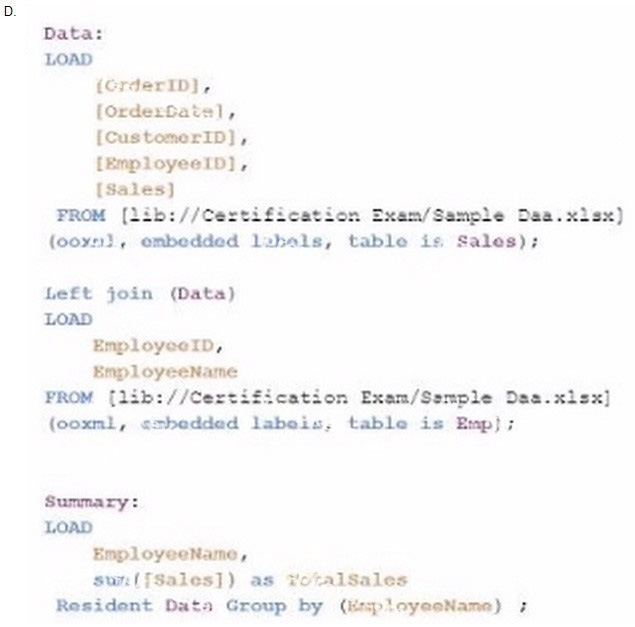
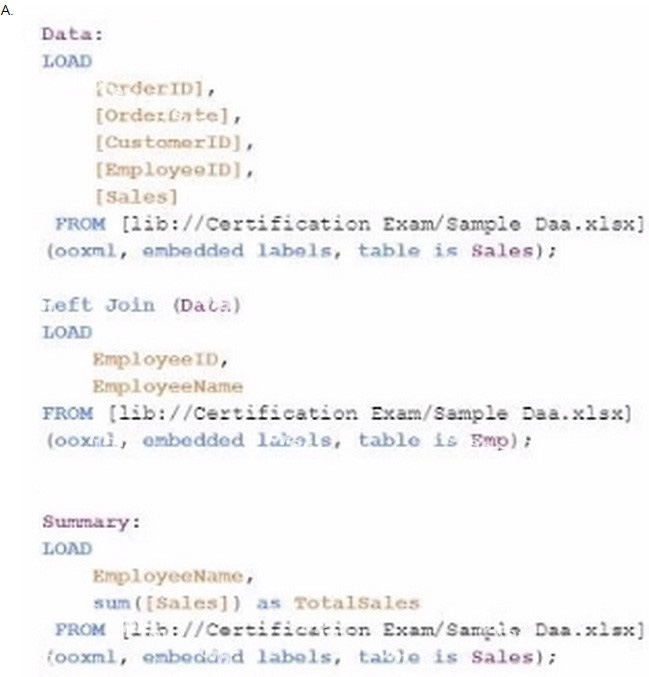
A data architect needs to build a dashboard that displays the aggregated sates for each sales representative. All aggregations on the data must be performed in the script.

Which script should the data architect use to meet these requirements?
A.

Option A

B.

Option B

C.

Option C

D.

Option D

Question 8
Single choice

A data architect needs to upload data from ten different sources, but only if there are any changes after the last reload. When data is updated, a new file is placed into a folder mapped to E:\486396169. The data connection points to this folder.

The data architect plans a script which will:

1. Verify that the file exists

2. If the file exists, upload it Otherwise, skip to the next piece of code.

The script will repeat this subroutine for each source. When the script ends, all uploaded files will be removed with a batch procedure.

Which option should the data architect use to meet these requirements?
A.

FilePath, FOR EACH, Peek, Drop

B.

FileSize, IF, THEN, END IF

C.

FilePath, IF, THEN, Drop

D.

FileExists, FOR EACH, IF

Question 9
Single choice

A data architect needs to load large amounts of data from a database that is continuously updated.

1. New records are added, and existing records get updated and deleted.
2. Each record has a LastModified field.
3. All existing records are exported into a QVD file.
4. The data architect wants to load the records into Qlik Sense efficiently.

Which steps should the data architect take to meet these requirements?

A.

1. Load the existing data from the QVD.
2. Load the new and updated data from the database without the rows that have just been loaded from the QVD and concatenate with data from the QVD.
3. Load all records from the key field from the database and use an INNER JOIN on the previous table.

B.

1. Use a partial LOAD to load new and updated data from the database.
2. Load the existing data from the QVD without the updated rows that have just been loaded from the database and concatenate with the new and updated records.
3. Use the PEEK function to remove the deleted rows.

C.

1. Load the new and updated data from the database.
2. Load the existing data from the QVD without the updated rows that have just been loaded from the database and concatenate with the new and updated records.
3. Load all records from the key field from the database and use an INNER JOIN on the previous table.

D.

1. Load the existing data from the QVD.
2. Load new and updated data from the database. Concatenate with the table loaded from the QVD.
3. Create a separate table for the deleted rows and use a WHERE NOT EXISTS to remove these records.

Question 10
Single choice

The data architect has been tasked with building a sales reporting application.

1. Part way through the year, the company realigned the sales territories
2. Sales reps need to track both their overall performance, and their performance in their current territory
3. Regional managers need to track performance for their region based on the date of the sale transaction
4. There is a data table from HR that contains the Sales Rep ID, the manager, the region, and the start and end dates for that assignment
5. Sales transactions have the salesperson in them, but not the manager or region.

What is the first step the data architect should take to build this data model to accurately reflect performance?

A.

Implement an "as of calendar against the sales table and use ApplyMap to fill in the needed management data

B.

Create a link table with a compound key of Sales Rep / Transaction Date to find the correct manager and region

C.

Use the IntervalMatch function with the transaction date and the HR table to generate point in time data

D.

Build a star schema around the sales table, and use the Hierarchy function to join the HR data to the model

Showing 10 of 50 questions · Unlock the full set